
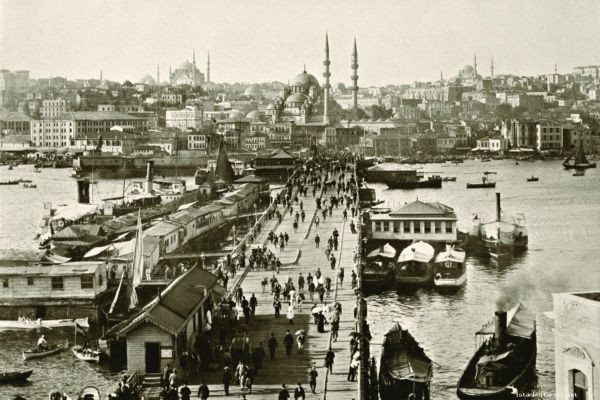
Often referred to as “The Last Powerful Sultan,” Abdulhamid ruled with a deep sense of responsibility toward the Muslim world and the Ottoman legacy. His reign marked a turning point—where the empire, though weakening, did not fade quietly. Instead, it transformed, adapted, and resisted under his careful watch.
One of Abdulhamid’s most defining traits was his intelligence. He was not merely a ruler by title but a strategist by nature. Understanding the growing influence of Europe, he used diplomacy as a weapon. Rather than engaging in constant warfare, he balanced relationships with major powers like Britain, Russia, and Germany, ensuring the empire remained politically relevant. His alliance with Germany, in particular, led to significant infrastructure projects, including the famous Hijaz Railway, which connected Istanbul to the holy cities of Makkah and Madinah—strengthening both political control and religious unity.
Religion played a central role in Abdulhamid’s governance. He revived the concept of Pan-Islamism, positioning himself not just as a sultan but as a Caliph—a leader of Muslims worldwide. At a time when colonial powers were expanding into Muslim lands, Abdulhamid used this identity to unite Muslims beyond borders, reminding them of a shared faith and heritage. This move worried European powers, who feared the political awakening of Muslim populations under their rule.
Despite his strategic brilliance, Abdulhamid’s rule was not without criticism. He was known for his strict control over dissent. Fearing rebellion and fragmentation, he established an extensive intelligence network and enforced censorship. To some, he was a protector of stability; to others, an authoritarian ruler who suppressed freedoms. This duality defines much of his legacy—was he a tyrant, or was he simply a ruler doing what was necessary to save a crumbling empire?
Economically and technologically, Abdulhamid also pushed for modernization. He invested in education, communication, and infrastructure. Schools were built, telegraph lines expanded, and administrative reforms introduced. While the empire could not match European industrial growth, these efforts slowed its decline and created a foundation for future transformation.
One of the most defining moments of his reign came with increasing opposition from reformist groups, particularly the Young Turks. They criticized his centralized rule and demanded constitutional governance. Eventually, in 1909, Abdulhamid was deposed and replaced, marking the end of his long and intense rule. With his removal, the empire lost a leader who had, despite all challenges, managed to keep it intact longer than many expected.
Today, Sultan Abdulhamid II is remembered in different ways depending on perspective. In many parts of the Muslim world, he is admired as a visionary leader who stood against colonial powers and defended Islamic unity. In Western narratives, he is often portrayed more critically, emphasizing his authoritarian methods. The truth, perhaps, lies somewhere in between.
He was not a perfect ruler—but he was a resilient one. A man who governed during one of the most difficult periods in Ottoman history and refused to let the empire collapse without a fight. His story is not just about power; it is about responsibility, resistance, and the weight of leadership in times of crisis.
Sultan Abdulhamid II remains a symbol of endurance—a reminder that even in decline, strength can still exist, and even in darkness, leadership can still shine.